


5 Best Posture Correctors for Women Who Work at Desks (2026 Reviews)

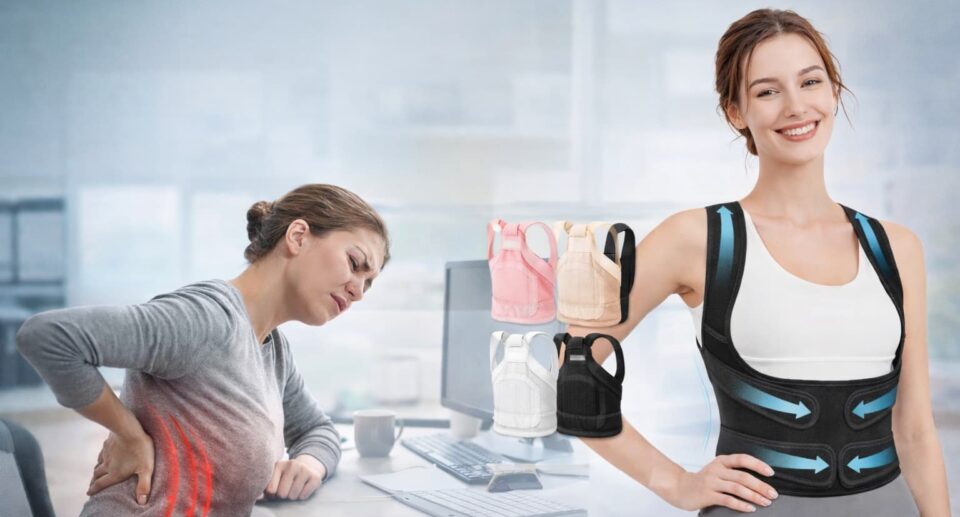
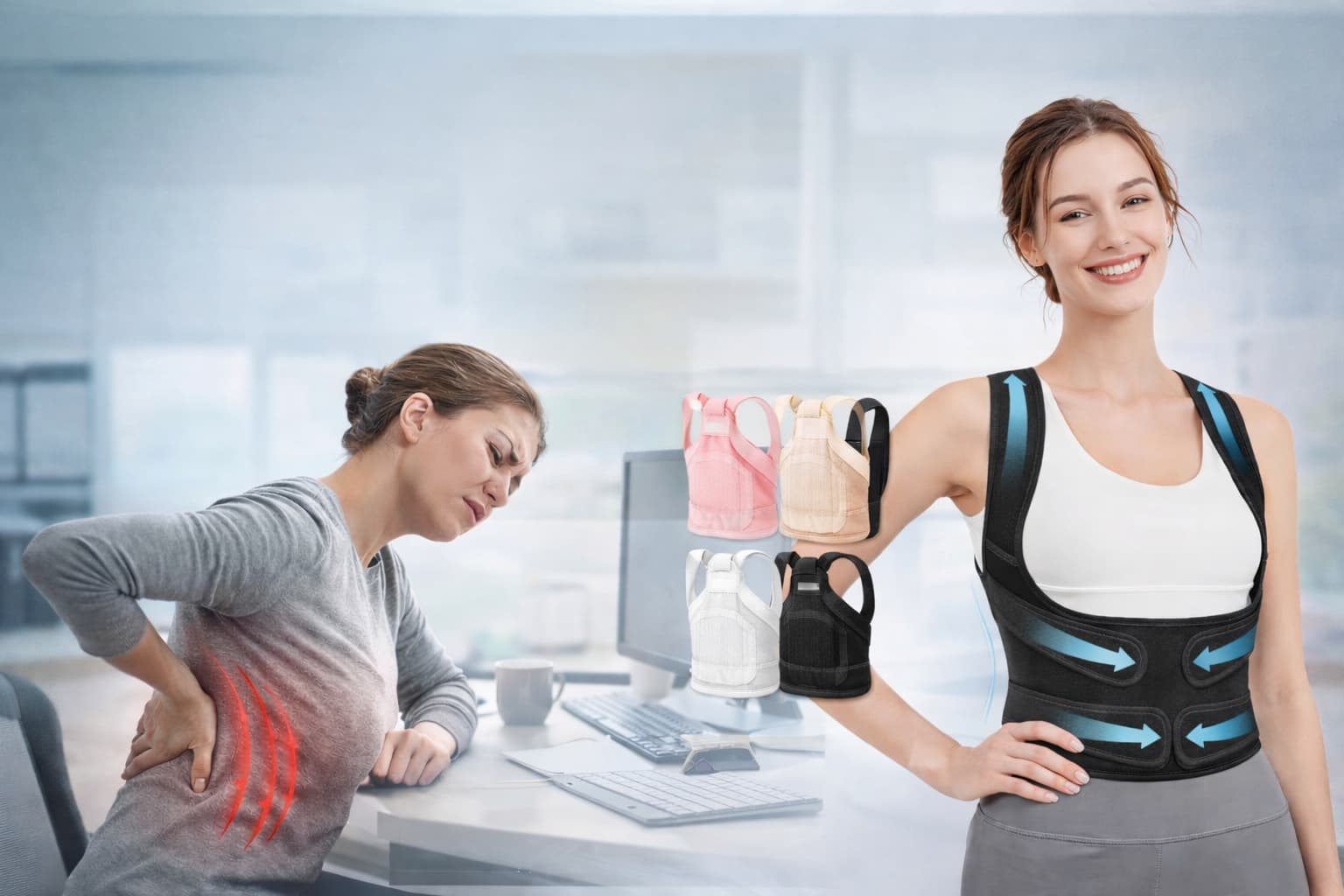
If you work at a desk, you already know how easy it is to “sink” into your chair shoulders rounding forward, neck jutting out, and your upper back quietly taking the hit. A good posture corrector can be a simple, wearable reminder to sit taller especially during long meetings, laptop work, or commuting.
In this 2026 buying guide, I focused on what desk-working women usually care about most: comfort for all-day wear, easy adjustability, and staying discreet under office outfits. Below is a quick summary so you can compare the top picks at a glance then I’ll break down each option with real-world pros/cons and who it’s best for.
This article contains affiliate links. If you purchase through these links, CoreWellFit may earn a small commission at no extra cost to you. This helps support our research, reviews, and free health content. We only recommend products we genuinely believe add value.
 Check on Amazon
Check on Amazon
Check on Amazon
Check on Amazon
Check on Amazon
Check on Amazon
Check on Amazon
Check on Amazon
Check on Amazon
Table of Contents
ToggleComfyBrace Posture Corrector Review
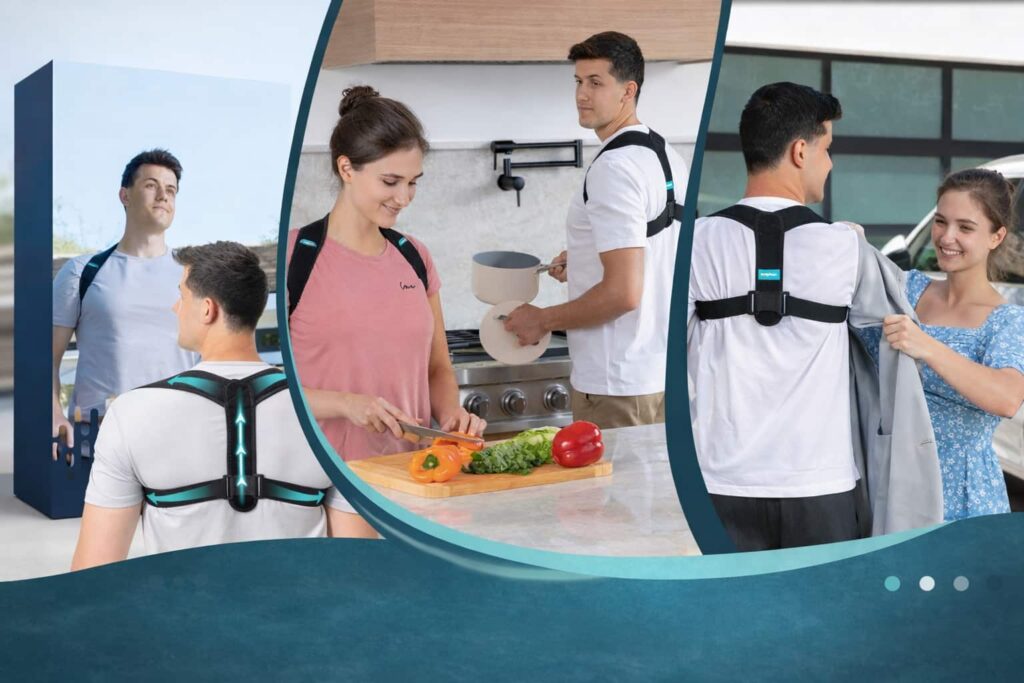
If you spend most of your workday sitting at a desk, shoulder rounding and upper-back fatigue can become part of your routine. The ComfyBrace Posture Corrector is one of the more widely purchased options in this category, and it’s often chosen for its balance between structure and comfort.
Why We Like It
Many users appreciate that this brace offers noticeable shoulder retraction without feeling overly rigid. The breathable fabric is frequently mentioned as a plus especially for women wearing it under work blouses or fitted tops during long office hours.
It’s also fully adjustable, which makes it suitable for a range of body types. For desk workers who want gentle posture support rather than aggressive correction, this model tends to strike a practical middle ground.
- + Breathable mesh material helps reduce heat buildup
- + Adjustable straps for customizable fit
- + Provides structured mid and upper back support
- + Lightweight enough for desk-based daily wear
- + Budget-friendly compared to smart posture devices
- – May feel tight during the first few uses
- – Requires minor strap adjustments for best comfort
- – Limited lower-back support compared to full braces
Our Verdict
For office-going women who are new to posture correctors, ComfyBrace can be a practical starting point. It’s affordable, relatively discreet under clothing, and offers structured shoulder support without feeling medical-grade bulky.
If your goal is gentle daily alignment support during 4-6 hour desk sessions not intensive back correction this option makes sense.
Upright GO 2 Premium Review
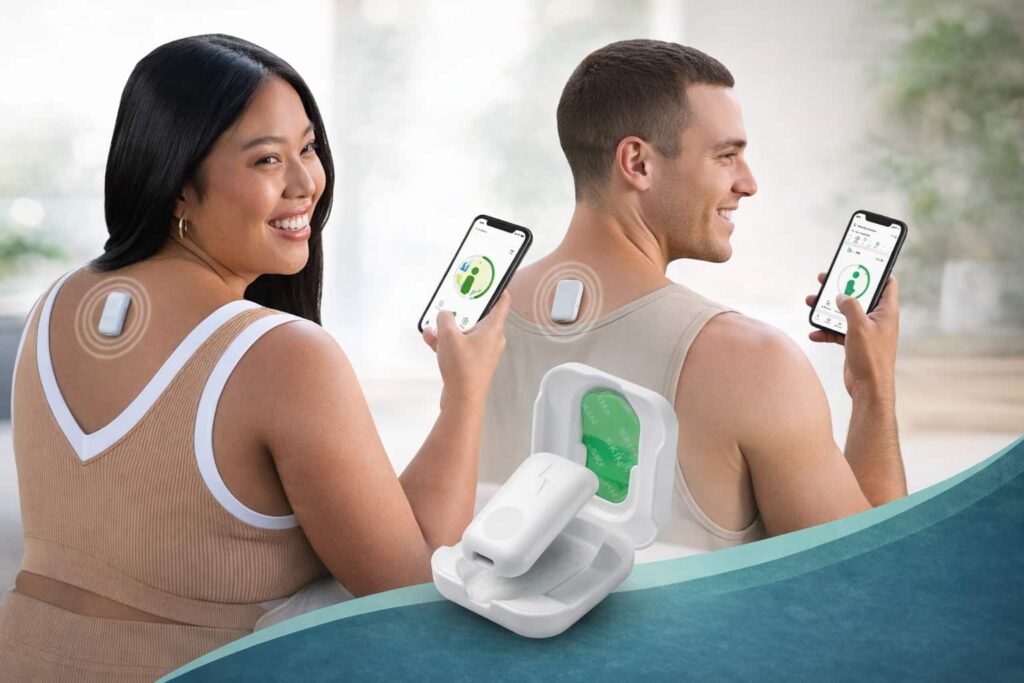
If you don’t like the idea of wearing straps under your office clothes, the Upright GO 2 Premium offers a completely different approach to posture correction. Instead of physically pulling your shoulders back, it trains you through real-time feedback.
Think of it less like a brace and more like a posture coach that lives on your upper back.
Why We Like It
What makes Upright GO 2 stand out is its behavior-based correction system. In training mode, the device gently vibrates when you slouch beyond your calibrated posture angle. That vibration acts as a subtle reminder to sit upright.
Many users say the biggest benefit isn’t the vibration itself it’s the increased awareness. Over time, you start recognizing what good posture actually feels like.
It’s also completely strapless. You can wear it using adhesive strips or a necklace attachment, which many users prefer for convenience and long-term cost savings.
For office-going women who want something discreet under blouses, dresses, or fitted tops, this is one of the least visible posture tools available.
- + Completely strapless and discreet under clothing
- + Real-time vibration feedback encourages posture awareness
- + Adjustable sensitivity and delay settings via app
- + Tracks posture data throughout the day
- + Many users report improved posture habits within weeks
- – Cannot detect shoulder roll independently from back angle
- – Adhesive strips may need frequent replacement
- – Occasional Bluetooth connection delays reported
Important Limitations (Based on User Feedback)
To get the most from this device, it’s important to understand what it can and cannot do.
It detects back angle, not shoulder blade positioning. So if your back is upright but your shoulders are rolled forward, it may not alert you.
It does not function when reclining or lying down.
Proper calibration is key. Several experienced users recommend calibrating in front of a full-length mirror to ensure your reference posture is truly upright.
Adhesive strips typically last only a few days, though some users extend their use with double-sided tape. Many prefer the necklace accessory instead.
Understanding these factors helps set realistic expectations and reduces frustration.
Our Verdict
If you want something that physically forces your posture into place, this is not that device. But if you’re serious about retraining your posture habits, Upright GO 2 can be extremely effective.
For office-going women who:
Work long hours at a desk
Prefer invisible solutions
Want posture awareness training rather than rigid bracing
This is one of the smartest posture investments available.
It doesn’t “fix” your posture for you but it consistently reminds you to fix it yourself. And over time, that awareness becomes habit.
Fit Geno Back Brace Review
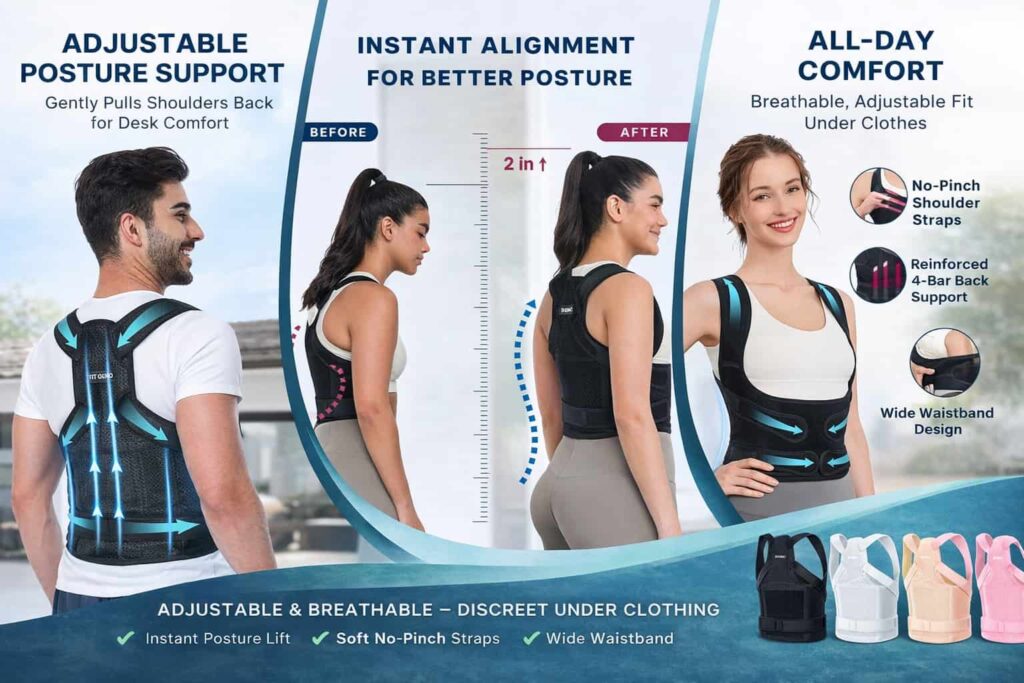
If you feel that lightweight posture correctors aren’t giving you enough structure, the Fit Geno Back Brace moves into a more supportive category. Unlike simple shoulder straps, this model is designed to provide full back support, including the mid and lower back, thanks to its structured design and removable fiberglass support rods.
For office-going women who sit long hours and also experience neck, shoulder, or mid-back strain, this brace aims to offer more comprehensive alignment support.
Why We Like It
What sets the Fit Geno brace apart is its structured build. It doesn’t just pull your shoulders back it provides reinforced spinal alignment support through vertical stays along the back and adjustable compression around the midsection.
Many users appreciate that it supports both shoulder positioning and core engagement. The abdominal wrap design encourages better posture awareness, especially for those who tend to relax their core while sitting at a desk.
Another standout feature is the breathable mesh material. Despite its structured support, it remains relatively comfortable for extended wear, and several reviewers mention that it can be worn under clothing without significant irritation.
For women working at desks, especially those dealing with recurring upper-back tension, this brace may feel more stable compared to minimal strap-only designs.
- + Full back support with removable fiberglass rods
- + Adjustable shoulder and abdominal straps for customized fit
- + Breathable mesh material helps reduce overheating
- + Provides stronger structure than basic shoulder-only braces
- + Many users report noticeable reduction in neck and shoulder strain
- – May feel snug if sizing is at the upper end of range
- – More structured design can feel firm during long seated sessions
- – Bulkier than minimalist posture correctors under fitted clothing
Important Considerations (Based on User Feedback)
Several users emphasize that posture correctors function more as reminders rather than rigid immobilizers. This applies here as well. The brace encourages better alignment by creating tension when you slouch, but it does not lock your spine into place.
Sizing appears important with this model. Some reviewers note that if your measurements fall at the top of a size range, the brace may feel tighter than expected. Taking accurate measurements before ordering is key.
The added structure including vertical stays along the back offers more support compared to lighter braces. For individuals needing stronger reinforcement, this is a benefit. However, if you’re looking for something ultra-discreet under thin office blouses, it may feel more noticeable.
Our Verdict
If you need stronger support than a basic shoulder strap and experience recurring neck or mid-back tension from long desk hours, Fit Geno is a solid step up.
It offers more structure, more adjustability, and more comprehensive spinal alignment support. While slightly bulkier than minimalist options, it may be better suited for women who want firmer reinforcement during extended work sessions.
For light posture reminders, choose a simpler brace. For stronger structured support, this one stands out in the mid-range category.
Schiara Posture Corrector Review
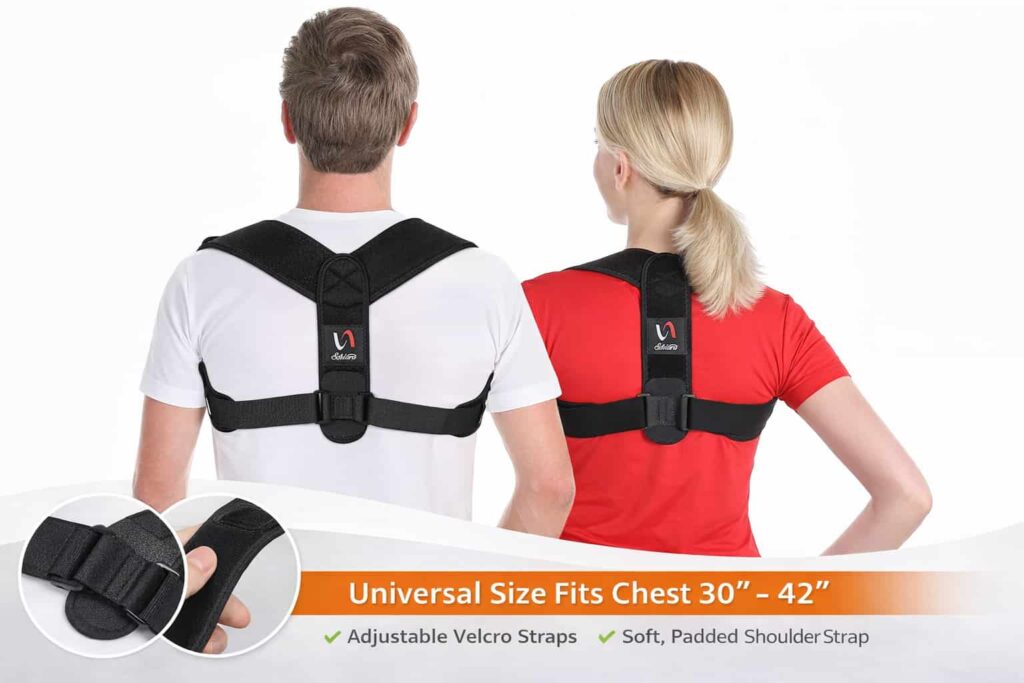
If you’re looking for something lightweight, minimal, and easy to wear under office clothes, the Schiara Posture Corrector falls into the “gentle daily reminder” category.
Unlike structured full-back braces, this model focuses primarily on shoulder alignment. It’s designed to be discreet, breathable, and simple enough to integrate into your daily desk routine without feeling overly medical or bulky.
For women working long hours at a computer who mainly struggle with rounded shoulders rather than severe back instability, this style may feel more manageable.
Why We Like It
The biggest advantage of the Schiara brace is its minimalist design. It’s slim enough to wear under most tops without being obvious, and several users mention that once adjusted properly, it becomes easy to forget you’re wearing it.
The adjustability also stands out. Even when worn loosely, it still acts as a posture reminder by gently pulling the shoulders back. For desk work, that gentle cue can be enough to prevent long periods of slouching.
It’s also more breathable than some full-torso braces, which makes it suitable for warmer environments or extended wear.
- + Slim and discreet under most office clothing
- + Lightweight and breathable material
- + Adjustable fit for chest sizes 30"–42"
- + Acts as a gentle reminder rather than rigid brace
- + Affordable entry-level posture corrector
- – May dig into underarm area during extended wear
- – Limited lower-back support
- – Requires gradual adjustment period for comfort
Important Considerations (Based on User Feedback)
Some users report that it may cause tingling or numbness in the arms if worn too tightly. Proper adjustment is key. Starting with shorter wear periods (20-30 minutes) and gradually increasing usage tends to improve comfort.
It’s important to remember that this brace is more of a posture reminder than a structural support device. It primarily addresses shoulder alignment and does not provide significant lower-back reinforcement.
Because of its slim build, it’s well-suited for mild slouching issues but may not be enough for individuals needing stronger spinal stabilization.
Our Verdict
If your main posture issue is rounded shoulders from desk work, and you want something discreet, lightweight, and budget-friendly, Schiara is a practical option.
It won’t deliver the structured reinforcement of something like Fit Geno, and it doesn’t provide smart tracking like Upright GO 2 but for simple daily posture awareness, it does the job.
For office-going women who want something subtle under their work attire, this is one of the more wearable options in the category.
Fitsupport Back Brace Review
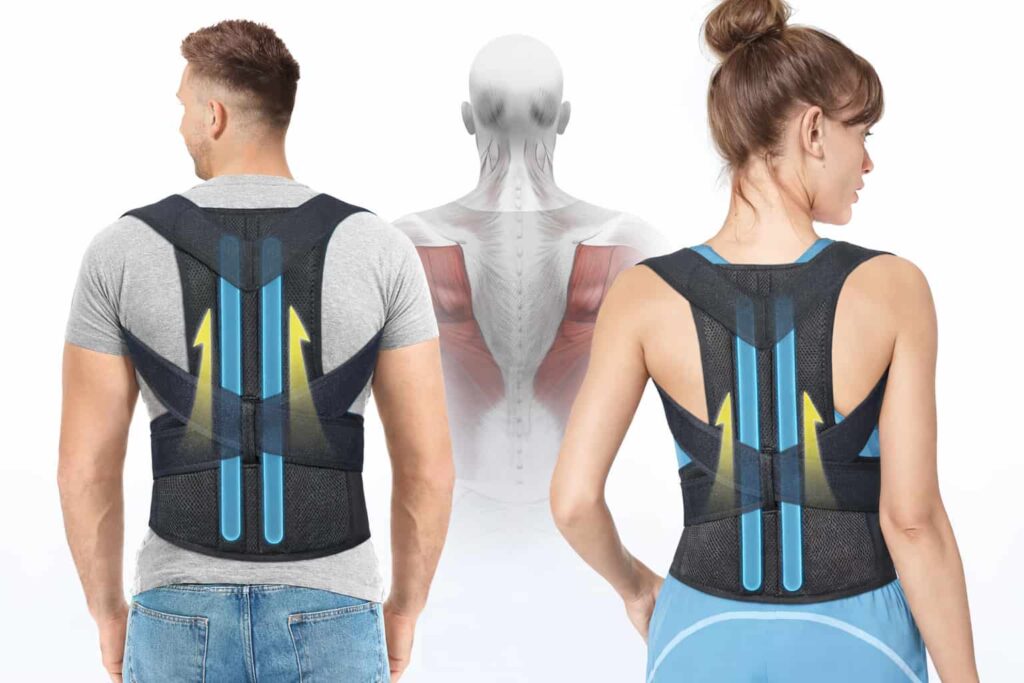
If you’re looking for a budget-friendly posture brace that provides both shoulder alignment and some lower back reinforcement, the Fitsupport Back Brace sits in the middle of the spectrum more supportive than ultra-minimal straps, but less rigid than heavy structured braces.
For office-going women who spend long hours sitting and occasionally feel upper or lower back fatigue, this brace aims to act as both a reminder and a mild structural support tool.
Why We Like It
The Fitsupport brace is designed with adjustable straps and a reinforced back panel (with a supportive rod structure). That added structure provides more resistance than lightweight shoulder-only braces.
Several users describe it as particularly helpful for long walks or extended standing but it’s also commonly used during desk work to prevent slouching once fatigue sets in.
It’s adjustable across a wide waist range, which makes sizing more flexible. And for those new to posture braces, many reviewers mention easing into use starting with shorter sessions and gradually increasing wear time.
For desk users who need more than just a gentle shoulder reminder but don’t want a highly rigid medical-style brace, this model falls into a practical middle ground.
- + Reinforced back support for upper and mid-back alignment
- + Adjustable straps accommodate wide waist range
- + Breathable material suitable for daily wear
- + Provides noticeable posture reminder during desk work
- + Affordable option for entry-level support
- – May feel tight after meals if worn snugly
- – Can cause warmth or mild sweating during extended wear
- – Not as rigid as medical-grade braces for severe conditions
Important Considerations (Based on User Feedback)
Many reviewers describe this brace as effective when worn consistently but not overly stiff. If you require very strong structural immobilization, this may not be sufficient.
Proper sizing matters. Some users report needing to exchange sizes for a better fit. If your measurements fall between size ranges, checking the chart carefully can help avoid discomfort.
Comfort tends to improve when usage is gradual. Starting with 20–30 minutes and increasing over time appears to produce better results than wearing it tightly for long periods right away.
Our Verdict
Fitsupport is a practical, budget-conscious option for office-going women who want moderate support and posture awareness without investing in a premium device.
It provides more reinforcement than minimalist shoulder straps, but it’s not intended to replace medical braces for serious spinal conditions.
If your goal is improved posture awareness during long desk hours with added mid-back support this option delivers solid value.
What to Look for in a Posture Corrector (For Desk-Working Women)
When you work at a desk, posture problems usually come from long hours of sitting not heavy lifting or physical strain. That means you don’t necessarily need the most rigid brace on the market. What you need is something comfortable enough to wear consistently.
The first thing to consider is material. If a brace traps heat or feels stiff against your skin, you simply won’t keep wearing it. Breathable mesh or lightweight fabric tends to work better for office settings, especially under blouses or fitted tops.
Fit is just as important. A posture corrector should feel supportive, not restrictive. If it’s too tight, you may notice tingling or pressure around the shoulders. If it’s too loose, it won’t do much at all. Adjustable straps make a noticeable difference, especially if your body measurements fall between size ranges.
Discreetness matters too. Some braces are slim enough to disappear under clothing, while others provide stronger back support but are slightly bulkier. If you work in a professional environment and prefer something subtle, minimalist designs or smart trainers may feel more comfortable. If you’re working from home or dealing with recurring back tension, a more structured brace might be worth it.
A Smarter Way to Choose
Instead of asking, “Which one is the strongest?” a better question is, “Which one will I realistically wear?”
If it fits comfortably under your work clothes, doesn’t irritate your skin, and matches your level of support needs, you’re far more likely to use it consistently. And consistency not intensity is what improves posture over time.
Most brands recommend starting with 20–30 minutes daily and gradually increasing to 1–2 hours. The goal is to build posture awareness, not rely on the brace all day.
Yes. Lightweight and minimalist designs are usually discreet under blouses and fitted tops. Structured braces may be slightly more noticeable under thin fabrics.
No device permanently fixes posture on its own. It works as a reminder tool to help build muscle awareness and better daily habits over time.
For most healthy adults, yes when worn properly and not too tightly. If you experience numbness, swelling, or discomfort, remove and readjust the brace.
Finding the Posture Corrector That Fits Your Routine
If you work at a desk all day, posture correction isn’t about forcing your back into a rigid position it’s about building awareness and reducing daily strain.
Some women prefer a lightweight reminder they can wear under their office clothes without thinking about it. Others need stronger structural support for recurring neck and mid-back tension. And some simply want a smart device that trains posture habits over time.
The right choice depends on your comfort level, work environment, and how much support you truly need.
Start small. Wear it consistently. Pay attention to how your body responds.
Posture improvement isn’t instant but with the right tool and steady use, it absolutely becomes noticeable.

Jessica Turner
Jessica Turner is a Fitness Product Buying Guide Writer at CoreWellFit. She reviews fitness-related products with a focus on usability, value, and practical home use. Her content helps readers make informed purchasing decisions for home workout equipment and fitness accessories through clear, experience-focused guidance.