



How to Improve Hip Mobility: 5 Key Techniques for Pain-Free Movement


Hip Mobility is deeply involved in our body’s movement, posture and daily activities. It is very important in daily activities, sports and maintaining balance because it makes things like walking and running easier. When we work while sitting continuously, or do not exercise for a long time, the hip gradually starts to stiffen. And due to this problem, back pain, knee pain and movement instability occur.
Today, in this blog, we will know about some important exercises that can solve this problem very quickly and bring health to movement.
Harvard physical therapy specialist Elissa Huber-Anderson says that stretching keeps the body mobile for longer.
The Difference Between Flexibility and Mobility
Flexibility and mobility are often confused, but they represent different aspects of movement.
The table below clearly explains how they differ and why both are important for a healthy, functional body.
| Aspect | Flexibility | Mobility |
|---|---|---|
| Definition | The ability of a muscle to stretch passively through its full range of motion. | The ability of a joint to move actively through its full range of motion with control. |
| Focus | Muscle length | Joint movement, strength, and stability |
| Type of Movement | Mostly passive | Active and controlled |
| Key Components | Stretching and muscle relaxation | Flexibility, strength, coordination, and balance |
| Example | Touching your toes while stretching | Performing a deep squat with proper form |
| Role in Daily Life | Helps reduce muscle tightness | Supports safe and efficient daily movements |
| Injury Prevention | Limited on its own | Highly effective when combined with strength |
- Flexibility and mobility are both essential, but they serve different purposes.
- Improving flexibility helps muscles stretch, while mobility ensures joints move efficiently and safely.
- For optimal movement and long-term joint health, focus on developing both.
Benefits of Improving Hip Mobility
The hip joint is one of the most important parts of our body. Sitting for long periods of time and not exercising regularly can reduce hip mobility. Improving hip mobility improves overall health and freedom of movement.
Enhanced Athletic Performance: Good hip mobility increases the range of motion of the body. This allows us to have longer strides and greater power output.
Reduced Risk of Injury: Weak hips put pressure on other parts of the body, which can lead to injuries. Improved hip mobility helps the body follow proper movement patterns, which can help prevent lower back pain, hip flexor strain, and knee injuries. This is especially important for people who sit for long periods of time.
Improved Posture and Stability: The hips strengthen the pelvis and core. Tight hips can lead to a variety of problems. Good hip mobility keeps the pelvis aligned, strengthens the core muscles, and reduces stress on the spine. This straightens posture and increases core stability.
Best Exercises for Hip Mobility
Dynamic Warm-Up Techniques
A dynamic warm-up is a method of moving the joints without keeping the body still.
Leg Swings
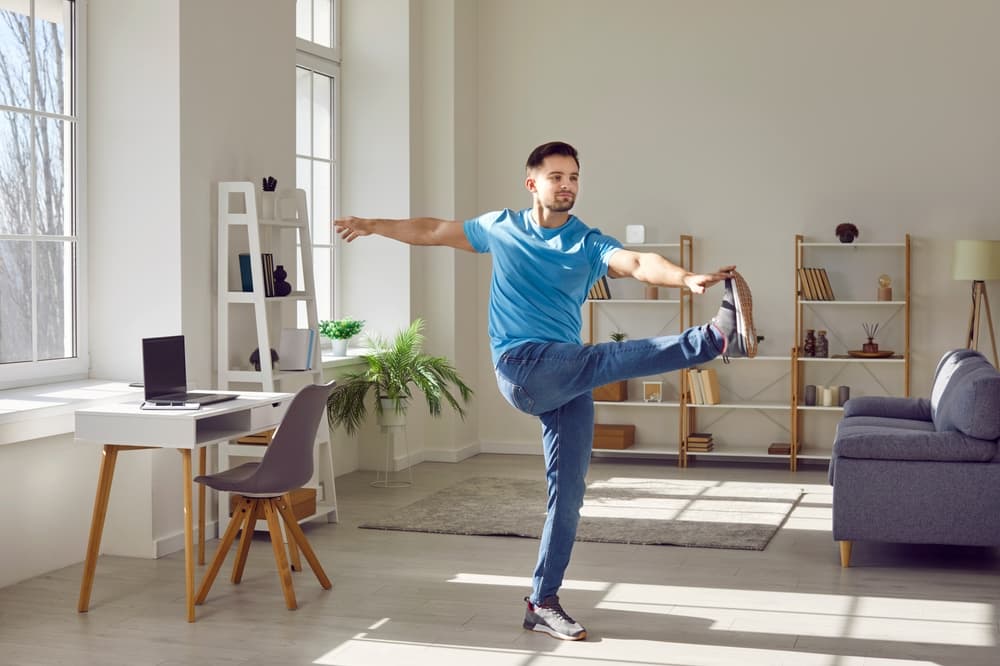
- Stand with one leg supported by a wall or something solid.
- Now swing the other leg back and forth like a pendulum.
- After 10-15 repetitions, swing it left and right (across the body).
Benefits: It increases the lubrication of the hip joint and prepares the muscles for the main exercise.
High Knees and Butt Kicks
Method:
- Stand straight and raise your knees as close to your chest as possible in a running position (High Knees).
- Then, in the same position, try to kick your buttocks or butt with your heels (Butt Kicks).
Benefits: It activates the hip flexors and quadriceps muscles and increases body temperature.
Targeted Stretching Exercises
These exercises help lengthen tight muscles and create space in the joints.
Pigeon Pose
Method:
- Place one leg on the floor with your back leg bent .
- Straighten your back leg and extend it out behind you.
- Now slowly lean forward, keeping your chest up.
Benefits: This is one of the best stretches in the world for the glutes and piriformis muscles.
Figure-Four Stretch
Method:
- Lie on your back. Bend both knees.
- Now place the heel of your right foot on your left knee.
- Hold your left thigh with both hands and slowly pull it towards your chest.
Benefits: This is very effective in reducing lower back pain and sciatica pain. It improves external rotation of the hip.
Butterfly Stretch

- Sit on the floor with your spine straight.
- Put your feet together. Bring your heels as close to your body as possible.
- Now hold your feet with both hands and try to lower your knees down like butterfly wings slowly.
Benefits: This removes tightness in the groin and inner thighs.
Mobility Exercises for Runners
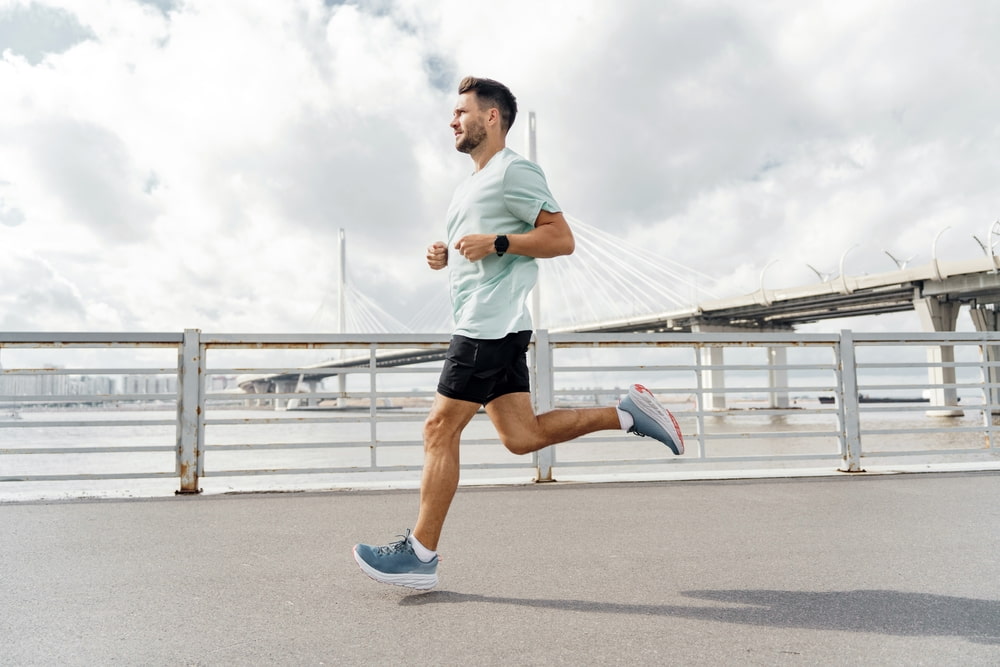
Importance of Hip Mobility for Runners
Our hips act as the main engine of the body while running.
Stride Length: The more mobile the hip joint, the longer each step (Stride) you will take, which will increase your speed.
Efficiency: If mobility is good, less energy is spent to push the body forward, so you can run for a long time without getting tired.
Knee & Back Protection: The main reason for knee and waist pain in runners is ‘tight hips’. If the hips are mobile, these pressures are absorbed by the muscles instead of the joints.
Specific Exercises for Runners
Lateral Lunges
Runners usually only move forward, which weakens the muscles on their sides.
Method:
- Stand straight and move one leg a lot to the side and sit down on that knee.
- Keeping the other leg straight.
- Then return to the previous position.
Benefits: It activates the muscles on both sides of the hip and maintains balance while running.
Hip CARs-Controlled Articular Rotations
This is the most advanced and effective mobility drill for the hip joint.
Method:
- Hold the wall with one hand and raise the other leg at the knee to the same height as the waist.
- Now rotate the knee outwards like a circle, take it back and bring it back forward again.
- This should be done very slowly and in a controlled manner.
Benefits: It helps maintain the full range of motion of the hip socket.
Cossack Squats
This is harder than a regular squat but very effective for runners.
Method: Similar to the lateral lunge, but here you have to spread one leg to the side and sit on the heel, and the other foot is facing the sky.
Benefits: It increases hip mobility, ankle flexibility and leg strength at the same time.
How to Improve Hip Mobility for Squats
Proper Squatting Form
To squat with proper form, you need to “hinge” your hips.
Method:
- Keep your feet shoulder-width apart.
- While sitting, imagine a chair behind you.
- Keep your chest tight and make sure your knees don’t go over your toes.
Exercises to Increase Range of Motion
The following 3 exercises work like magic to increase the depth of your squat:
Goblet Squats
This is the best way to increase mobility because it makes it easier to maintain balance when you hold the weight in front of you.
Method:
- Hold a dumbbell or kettlebell close to your chest.
- Now slowly lower yourself into a squat position.
- As you go down, gently push your knees outward with your elbows.
- Hold this position for 5-10 seconds.
Benefits: This helps open the hip joint and keep your chest straight.
Box Squats with Dynamic Stretching
This is best for those who are afraid of going straight down or have trouble balancing.
Method:
- Place a box or bench behind you.
- While sitting, lightly touch the box and while rising, contract your hip muscles and rise up.
- You can do light dynamic stretching .
Benefits: It strengthens the hip flexors and teaches you the correct depth of the squat.
Sumo Squats

Method:
- Stand with your feet slightly wider than normal squats and turn your feet outward .
- Now lower yourself down.
Benefits: It stretches the ‘Adductor’ or inner thigh muscles, which creates more space inside the hip joint.
FAQ
Q: What is hip mobility?
Answer: Hip mobility is the ability of your hips to move freely with control. It helps in walking, squatting, and prevents pain or injury.
Q: How often should I do hip mobility exercises?
Answer: 3-5 times per week is ideal. Even 5-10 minutes daily can gradually improve mobility.
Q: Which exercises improve hip mobility?
Answer: Leg swings, pigeon pose, figure-four stretch, butterfly stretch, and dynamic movements like high knees and lunges are very effective.
Q: Can hip mobility exercises reduce lower back pain?
Answer: Yes, hip mobility exercises can significantly help reduce lower back pain. When the hips are tight or lack proper mobility, the lower back often compensates by working harder during movements like walking, bending, or lifting. This extra strain can lead to stiffness, discomfort, and chronic pain over time.
A few words from CoreWellfit
Improving hip mobility is easy. You can easily get good results by doing this type of exercise every day for some time. And improving hip mobility will give you freedom in your movement. Your body will become stronger and pain-free. You will not be afraid of injury, and your performance in sports will increase significantly.
Start today and your hips will thank you, and you will enjoy a more active, healthy and happy life. Let’s make ourselves more independent!