

11 Simple Yet Powerful Breathing Exercises for Panic Attacks at Home


Panic attacks cause sudden, intense feelings of fear, anxiety, and shortness of breath that can be difficult to control. But the good news is that simple Breathing Exercises for Panic Attacks can help you quickly calm your body and mind. Breathing exercises reset our nervous system, slow our heart rate, and signal to our brain that we are safe. Doing these exercises at home for a few minutes can reduce the intensity of a panic attack, help you manage your fear, and help you gradually return to normal.
What is a panic attack?
A panic attack is a sudden, anxiety attack that feels physically overwhelming and frightening. It is actually an exaggerated version of your body’s natural “fight-or-flight” response, in which the body senses danger even when there is none. It causes a rapid heartbeat, difficulty breathing, chest tightness, dizziness or fear of fainting, sweating, shaking, and a feeling of impending doom. They usually last 5-20 minutes, but sometimes they feel like a heart attack and require medical attention.
If these attacks occur repeatedly and you are constantly afraid that they will happen again, it is considered panic disorder, which is part of an anxiety disorder.
How many people experience it?
Panic attacks or disorders are widespread, affecting millions of people worldwide. According to the WHO, anxiety disorders include panic disorder, and they are one of the most common mental health problems in the world. It has been considered a priority condition in the WHO’s mhGAP program.
11 Powerful Breathing Exercises
1. 4-7-8 Breathing (Dr. Andrew Weil) The Most Famous “Instant Calm” Technique
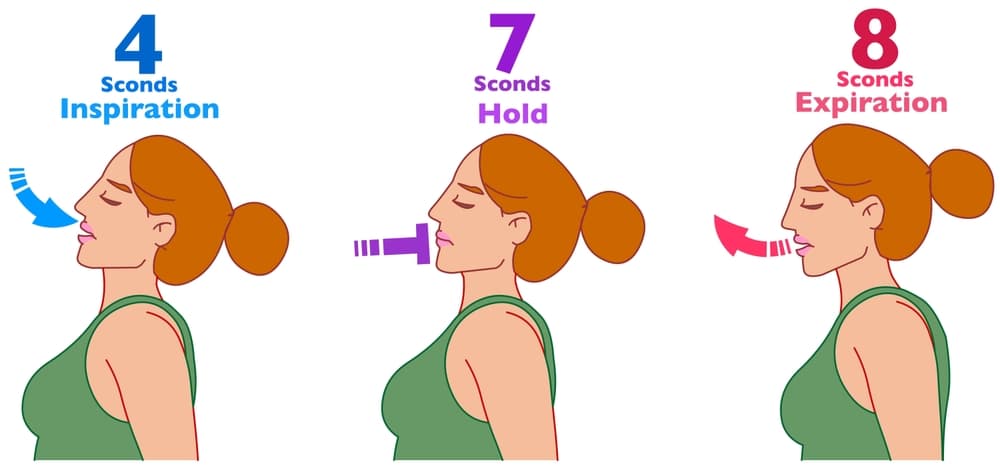
This is the most commonly suggested technique by doctors and therapists when they tell someone to stop a panic attack quickly. Harvard-trained physician Dr. Andrew Weil calls it “the nervous system’s natural tranquilizer.”
An 8-second-long exhalation stimulates the vagus nerve, and the body comes out of panic mode within 60 seconds.
How to Do 4-7-8 Breathing (Step-by-Step)
- Sit or lie down (if you are panicking right now, stay where you are).
- Place the tip of your tongue against the gum just behind your upper front teeth (keep it like this the entire time).
- Keep your mouth closed and breathe in quietly through your nose for 4 seconds.
- Hold your breath for 7 seconds.
- Open your mouth slightly and exhale completely for 8 seconds (make a “whoosh” sound).
- This is one cycle. → Do it only 4 times (do not do more than 4 times at first).
When to do it
- As soon as a panic attack starts
- When you wake up at night and panic
- Whenever you feel anger or anxiety rising
How quickly does it work?
Most people calm down quite a bit in 1-2 cycles (30-40 seconds). After four cycles, panic usually drops from 10/10 to 2-3/10.
Important tips
First week: Practice twice a day (morning + night) while you are calm.
If you have trouble holding for 7 seconds, start with 3-4-6 or 4-6-8, then increase the count.
Absolutely safe-used by millions of people, but if you feel dizzy, lower it to 6 seconds without breathing.
2. Box Breathing (4-4-4-4) – Used by Navy SEALs Even in Combat
Also called “square breathing”. This is what American Navy SEALs, pilots, and police special forces use when their heart rate exceeds 180, but they need to keep their heads down. It works excellently for panic attacks because all four steps are the same -the brain understands “it’s no longer dangerous”.
How to do it (step by step)
- Sit comfortably, keeping your back straight.
- You can close your eyes (optional).
- Inhale slowly through your nose (count 1-2-3-4).
- Hold your breath for 4 seconds (1-2-3-4).
- Exhale slowly through your mouth (1-2-3-4).
- Hold your breath completely for 4 seconds (1-2-3-4).
- That’s a “box”. Start again.
If you have a panic attack, do 4-6 boxes in a row (total 1-2 minutes).
When to do it
Before or in the middle of a panic attack
In the office, on the bus, in the exam hall-no one will even notice
Practice for 5 minutes every day to reduce the chances of panic
How quickly does it work?
After 3-4 boxes (only 60-90 seconds), the heart rate drops significantly, and the head becomes clear.
3. Belly Breathing
When we breathe quickly and shallowly (through the chest) during a panic attack, the body loses oxygen balance. Belly breathing helps restore this balance and calms the nervous system.
Why is it so effective?
Parasympathetic activation: This activates the ‘rest and digest’ part of your nervous system, which lowers the heart rate and normalises blood pressure.
Use of the diaphragm: This involves the diaphragm, a muscle located below the lungs, which helps the lungs expand fully and take in more oxygen.
Easy method of belly breathing
Position: Sit comfortably.
Hand position: Place one hand on your chest and the other on your stomach.
Breathing (through the nose):
- Breathe in slowly, deeply and comfortably through your nose.
- Note that the hand on the stomach should rise upwards (inflating the stomach).
- The hand on the chest should not move.
Breath holding: Hold the breath for a second or two.
Exhalation (through the mouth):
Exhale slowly and thoroughly through the mouth with the lips slightly rounded (in a blowing motion).
As you exhale, pull the stomach inwards so that the hand on the stomach drops down.
Try to exhale for twice as long as it took you to inhale.
Repeat: Continue this process calmly for a few minutes.
4. Alternate Nostril Breathing (Nadi Shodhana)
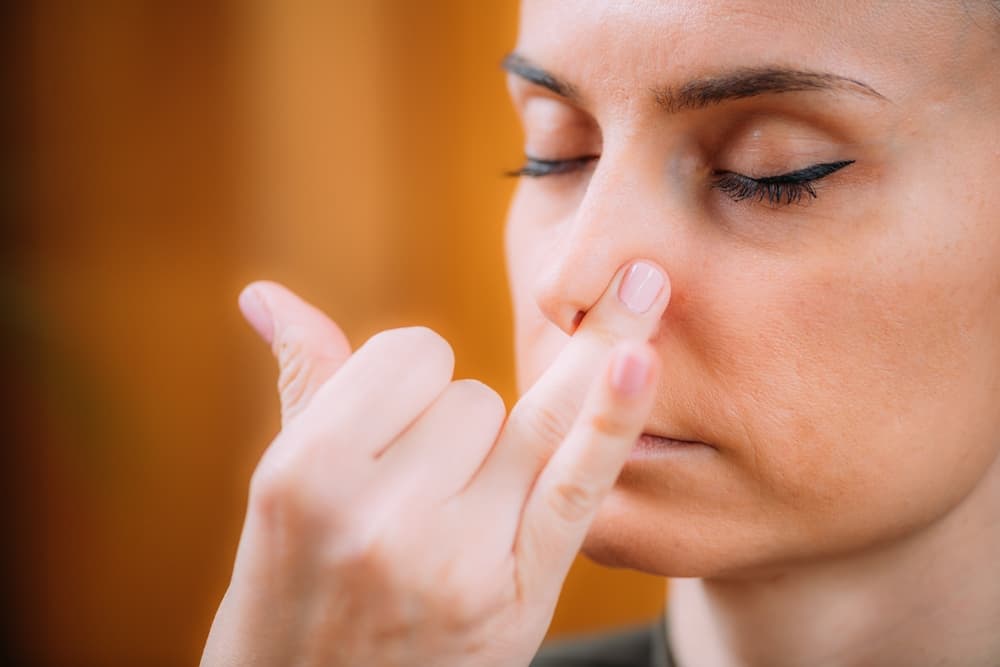
Why does it work?
- Calms the nervous system
- Balances the right and left sides of the brain
- Slows down breathing, thereby reducing panic
- Reduces anxiety levels
- Increases attention and focus
How to do it (Step-by-Step):
- Sit comfortably and upright.
- Close the right nostril with the thumb of your right hand.
- Inhale slowly through the left nostril.
- Open the right nostril and exhale.
- Now breathe through the right nostril.
- Close the right nostril and exhale through the left.
5. 5-5-5-5 Square Breathing
5-5-5-5 Square Breathing is a deep breathing technique, where inhale, hold, release, and pause-each step is done for 5 seconds. It helps to calm the mind, quickly reduce panic attacks, stress, and anxiety.
Why is this method so effective?
- Calms the nervous system
- Controls heart rate
- Reduces hyperventilation
- Focuses the mind on a steady pattern
- Reduces panic and fear and restores rationality
How to do it:
- Sit or stand comfortably.
- Inhale through your nose for 5 seconds.
- Hold your breath for 5 seconds.
- Exhale slowly through your mouth .
- Pause for 5 seconds after exhaling.
This is a square. Repeat this 6-8 times.
6. Coherent Breathing
Coherent Breathing is a breathing technique that involves taking slow, even breaths at about 5-6 per minute. It creates “coherence” or coordination between the heart rate and the nervous system, which helps reduce panic attacks, anxiety, and stress.
Why is Coherent Breathing effective?
- Stabilises heart rate (increases Heart Rate Variability)
- Reduces stress and anxiety
- Controls breathing rate
- Keeps the mind calm and focused
- Helps with sleep and mental health
How to do it :
- Sit comfortably upright or lie down.
- Inhale slowly through your nose, holding for about 5 seconds.
- Exhale slowly through your nose , holding for about 5 seconds.
- Maintain this rhythm slowly for 5-6 minutes.
Goal: It is most essential to keep the length of your breath even and breathe at a natural, slow pace.
7. Pursed Lip Breathing
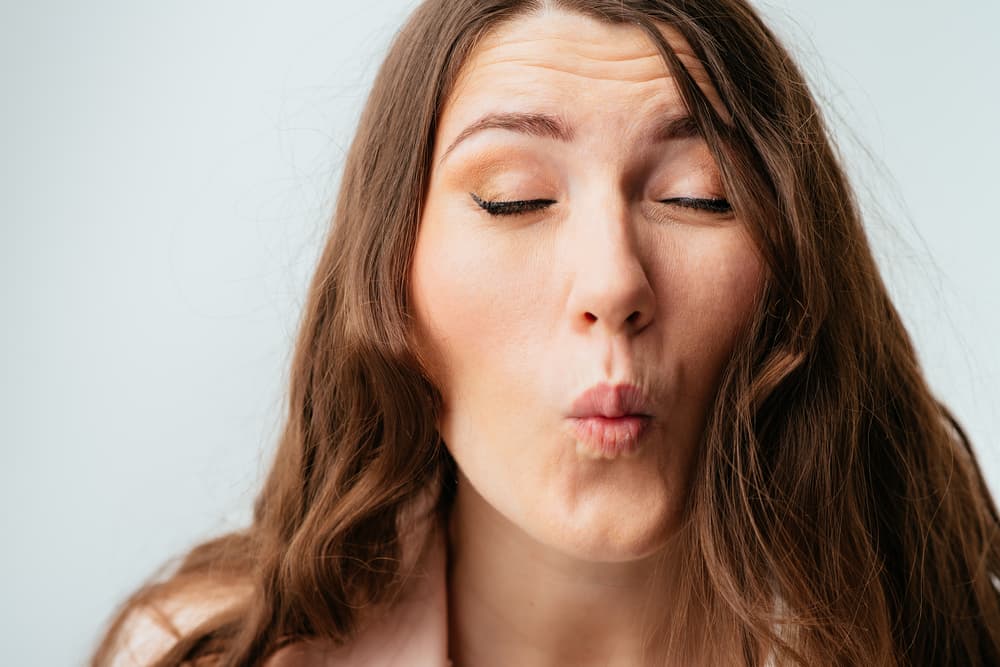
It reduces pressure in your lungs and helps to reduce panic attacks or shortness of breath quickly.
Why is Pursed-Lip Breathing effective?
- Slows breathing and regulates heart rate.
- Increases oxygen flow by reducing pressure inside the lungs
- Reduces hyperventilation or excessive rapid breathing
- Reduces stress and fear
- Can be easily done at home
How to do it :
- Sit or stand comfortably.
- Inhale slowly through your nose .
- Exhale slowly through your mouth with salt for 4-6 seconds.
- Use your abdominal muscles while breathing in, so that your entire lungs are filled.
- Repeat this method 5-10 times.
8. Lion’s Breath (Simhasana)
Lion’s Breath is a yoga-based breathing technique that involves opening your mouth wide and making a “haa” sound as you exhale. It helps reduce stress, panic attacks, and anxiety, and relaxes the muscles in your body and face.
Why is Lion’s Breath effective?
- Relaxes the muscles in your face, throat, and shoulders
- Reduces stress and fear
- Increases focus on your breathing, creating a meditative effect.
- Ensures full use of your lungs
- Can be easily done at home
How to do it :
- Sit comfortably upright or have a soft surface around you.
- Take a deep breath through your nose.
- Open your eyes wide or look into your eyes.
- Repeat this process 5-10 times.
9. Extended Exhale
Extended Exhale is a breathing technique in which the exhalation is longer than the inhalation. It calms the nervous system, reduces hyperventilation, and helps quickly reduce the intensity of panic attacks.
Why is Extended Exhale effective?
- Activates the parasympathetic nervous system (brings peace)
- Slows the heart rate
- Controls excessive breathing
- Reduces anxiety and fear
- Can be easily done at home
How to do it :
- Sit or lie down comfortably.
- Exhale slowly through your mouth.
- Use your abdominal muscles while exhaling.
- Repeat this method 5-10 times.
10. Sitkari Cooling Breath
Sitkari (cooling breath) is an ancient yogic breathing technique in which the tongue is used to make a gentle “hissing” sound while inhaling through the nose. It quickly cools and calms the body and mind, especially helping to reduce panic attacks, anxiety and mental tension.
Why is Sitkari effective?
- Calms the body and mind
- Reduces tension, fear and stress
- Reduces sweating and excess body heat
- Keeps the heart rate stable
- Can be easily done at home
How to do it :
- Sit comfortably and upright.
- Keep your lips slightly parted, place your tongue behind your teeth, and inhale slowly through your nose, making a gentle “hissing” sound.
- Hold the breath for a moment (if comfortable).
- Exhale slowly through your mouth or nose.
- Repeat 5–10 times.
11. Bhramari (Humming Bee Breath)
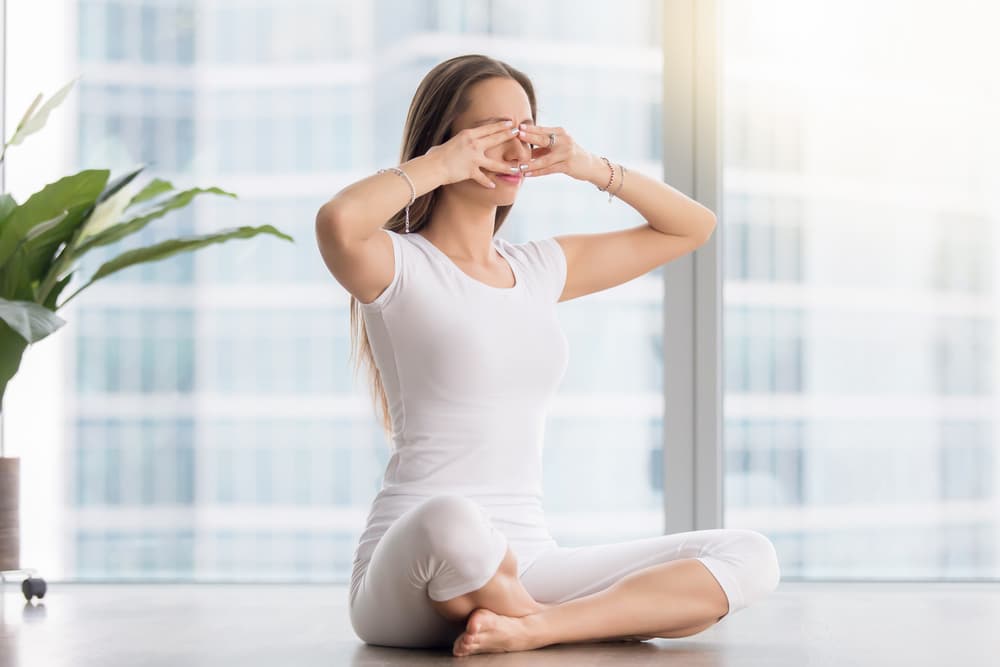
Bhramari (Bee Breath) is an ancient yogic breathing technique in which the exhalation produces a “hum” or bee-like sound. It helps reduce stress, fear, and panic attacks quickly, and keeps the mind calm and steady.
Why is Bhramari effective?
- Reduces stress hormones in the brain
- Calms the nervous system
- Improves sleep and focus
- Reduces panic attacks and anxiety quickly
- Can be easily done at home
How to do it :
- Sit comfortably, keep your eyes closed.
- Take a deep breath through your nose.
- As you exhale, make a “hum” sound in your throat with your mouth closed.
- You can close your eyes or press them with your hands (optional).
- Repeat 5–10 times.
What to do if you have a panic attack at night
Having a panic attack at night while you are sleeping or resting can be very distressing and frightening, as it can make you feel like you are out of control. This is called a ‘nocturnal panic attack’.
Here are some quick and practical guidelines for what to do if you have a panic attack at night:
Calm yourself and recognise the situation
Turn on the light (if necessary): If the room is very dark, turn on a dim light or night lamp. Darkness can make you feel more afraid.
Remind yourself: Repeatedly tell yourself, “This is a panic attack, it won’t hurt me. It will pass in a moment.”
Use water: Get up and drink a glass of cold water or splash cold water on your face. Cold water acts as an immediate “shock” therapy, calming the nervous system.
When should you see a doctor?
1. Panic attacks are occurring very frequently.
- Panic attacks occur several times a day or several times a week.
2. Daily life is being disrupted.
- Difficulty doing work, studies or household chores.
3. Difficulty breathing or chest pressure
- Chest pain or shortness of breath is chronic.
4. Long-term anxiety or depression
- The mind is not settling; you have been worried or anxious for a long time.
5. Sleep problems
- Not sleeping properly, waking up repeatedly at night.
6. Risk of harming yourself or others
- Contact a frontline doctor if you lose control of yourself or have thoughts of suicide.
FAQ: Breathing Exercises for Panic Attacks
1. How can I stop a panic attack in 30 seconds?
You can calm a panic attack quickly by focusing on slow, deep breathing, like 4-7-8 or Box Breathing. Inhale deeply, hold, and exhale slowly to activate your parasympathetic nervous system.
2. Which breathing stops panic attack instantly?
4-7-8 Breathing and Box Breathing are the most effective for instant relief. They slow your heart rate, reduce hyperventilation, and help regain control within minutes.
3. Is 4-7-8 breathing dangerous?
No, 4-7-8 breathing is safe for most people. Avoid holding your breath too long if you feel dizzy or lightheaded. People with severe lung or heart conditions should consult a doctor first.
4. Can breathing exercises cure anxiety forever?
Breathing exercises cannot cure anxiety permanently, but they are highly effective for managing symptoms and reducing panic attacks. For long-term relief, combine with therapy, lifestyle changes, and stress management.
A few words from CoreWellfit
Panic attacks come on suddenly and create fear and anxiety, but some simple Breathing Exercises for Panic Attacks can be done at home to help control them. 4-7-8 Breathing, Box Breathing, Alternate Nostril Breathing and other exercises calm the body and mind, control the heart rate and help reduce panic.
Regularly practising these breathing exercises reduces stress, anxiety and fear, and you can gradually return to normal. However, if panic attacks are frequent or disrupt daily life, it is essential to consult a doctor or mental health specialist.
Remember regular practice and conscious breathing are powerful tools for mental health.