


How a beginner gained muscle with just dumbbells at home

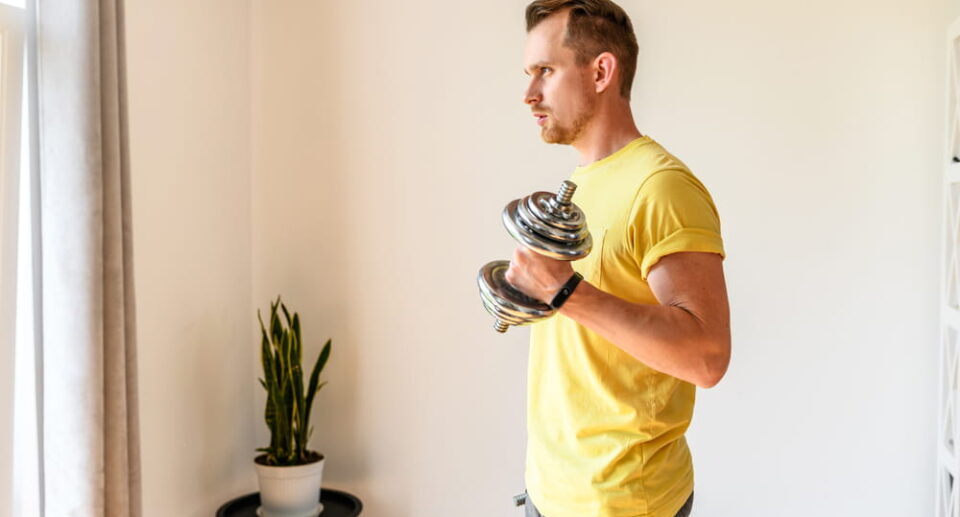
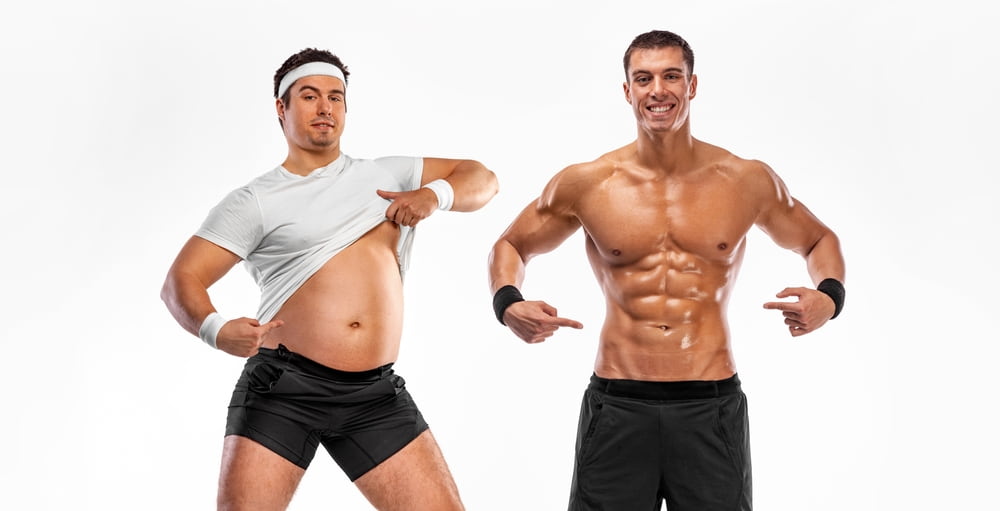
Starting a fitness journey can feel overwhelming, especially if you don’t have access to a gym or expensive equipment. But the truth is, you don’t need a full setup to see real results. This story is all about how a Beginner gained muscle with dumbbells at home, proving that consistency and the right approach matter more than anything else.
Many people believe muscle building requires heavy machines or professional guidance, but that’s not always the case. With just a pair of dumbbells, a simple routine, and dedication, it’s possible to transform your body right from your living room. This journey highlights how a Beginner gained muscle with dumbbells at home by focusing on basic exercises, proper form, and gradual progress.
If you’re someone who feels stuck or unsure where to start, this guide will inspire you to take that first step. You’ll discover how a Beginner gained muscle with dumbbells at home without complicated plans just smart training, patience, and a strong mindset.
Required tools
Choosing the Right Dumbbell
The biggest confusion for a beginner is how much weight dumbbell to buy. It is good to have two options here:
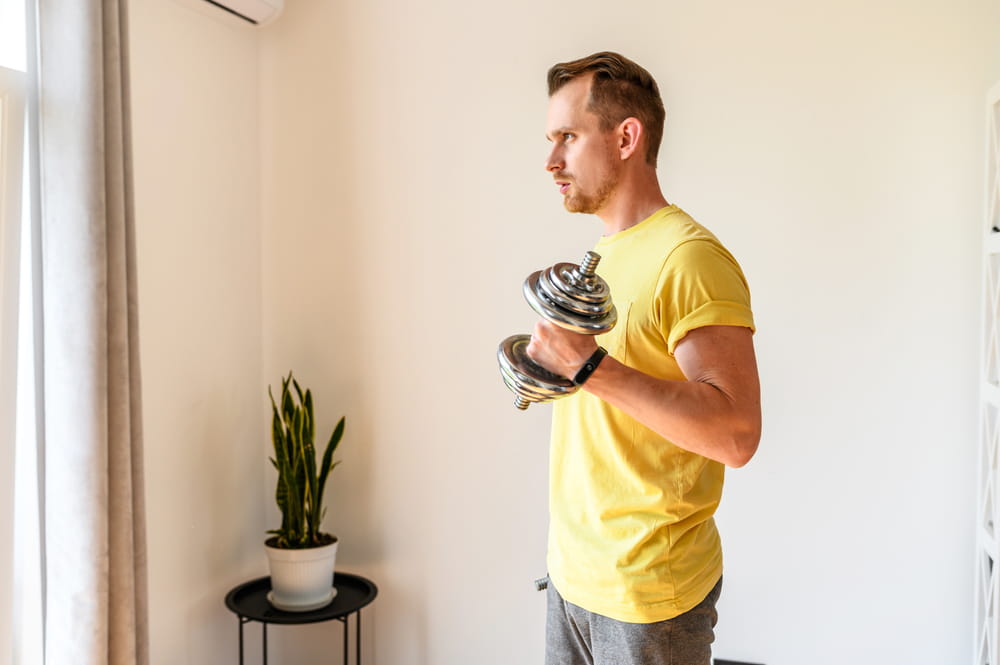
Adjustable Dumbbells: These are the most affordable. You can increase or decrease the weight by opening the plate on a rod. This makes progressive overload easier.
Fixed Dumbbells: If you have the budget, you can start with a pair of 5 kg and a pair of 10 kg dumbbells.
A sturdy bench
It is good to have a bench for chest press or shoulder press. However, you can add the following as ‘budget options’ in the article:
- If you do not have a flat bench, you can also do chest press lying on a hard floor .
- Triceps dips or step-ups can be done using a sofa or chair.
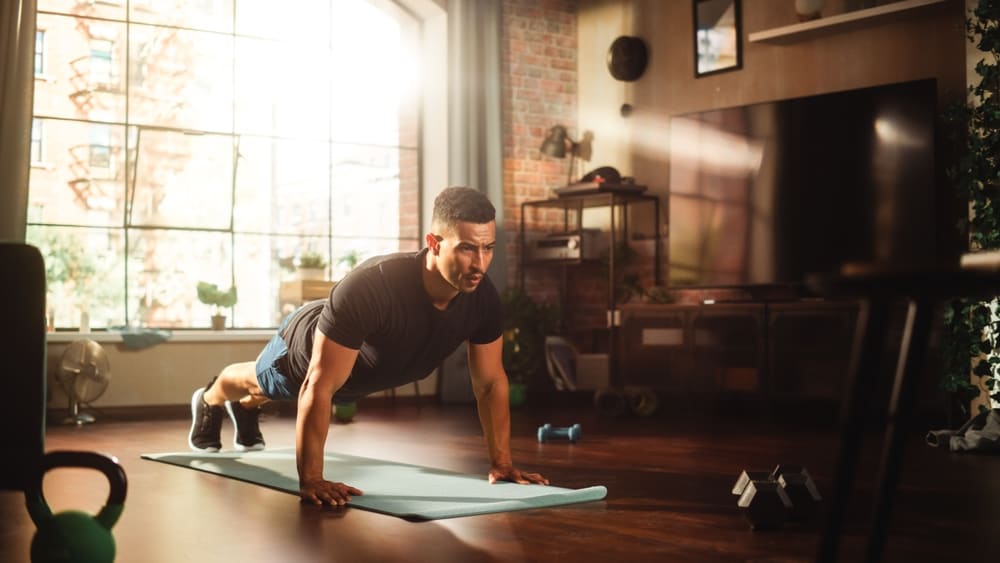
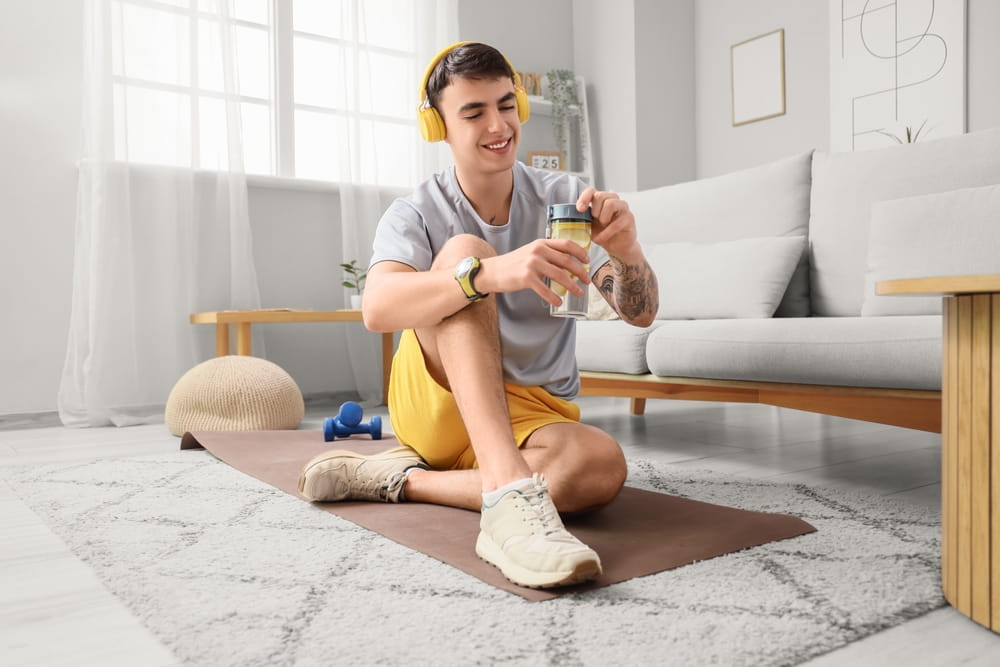
Yoga Mat: A good grip mat is essential to protect your back and prevent your hands from slipping while exercising on the floor. It will also provide comfort during push-ups or core exercises.
The right shoes and clothing: Many people think that you can exercise barefoot at home, but when working with dumbbells, it is important to wear sports shoes for foot protection and balance. You can also mention cotton or synthetic clothing that absorbs sweat.
A mirror: For beginners, it is very important to exercise standing in front of a mirror. This helps you understand whether your ‘posture’ or body position is correct or not, which helps to avoid injury.
Progressive overload
Progressive overload is the gradual increase in the intensity or load of your exercise over time. When you put more pressure on your body than before, the body will make the muscles bigger and stronger to withstand that pressure.
How to do progressive overload with dumbbells?
Many people think that increasing the weight is the only way. But for those who have limited dumbbells at home, there are 4 more effective ways:
Increasing Reps: If you can do 8 reps with a 10 kg dumbbell, then next week aim to do 10 or 12 reps.
Increasing Sets: Did you do 3 sets before? Now try 4 sets with the same weight.
Reducing Rest: If you used to rest for 2 minutes between sets, now reduce it to 90 seconds or 1 minute. This will increase the stress or ‘intensity’ on the muscles.
Tempo or speed control: Do the exercise more slowly. Especially when lowering the dumbbell , take 3-4 seconds. This will tear the muscle fibres more, and later they will grow and grow together.
Increase the weight: When you see that the current weight has become too easy, then increase the weight by at least 1-2 kg.
Nutrition and Diet
Calorie Surplus
You need to consume 10-15% more calories than you burn throughout the day to build muscle. This is called ‘bucking’. However, you should make sure that you do not gain weight by eating excess junk food, but rather that your calories come from nutritious foods.
Protein: The raw material for building muscle
During exercise, muscle fibres are torn. Protein repairs those fibres and makes them bigger and stronger than before.
How much protein: It is ideal for a beginner to consume 1.5 to 2 grams of protein per kilogram of body weight. .
Sources: Eggs, chicken, fish, lentils, cheese, milk and nuts.
Carbohydrates and Fats
Carbohydrates: Provide energy for exercise. Oats, red rice, sweet potatoes and bananas are great sources of carbohydrates.
Fat: Good quality fat is essential for maintaining hormonal balance . It can be found in nuts, olive oil, and egg yolks.
NB: If you are completely healthy and maintain a calorie surplus through moderate, clean eating, then it is usually not necessary to seek medical advice separately. It is a safe and effective method when planned properly.
However, if you have a physical condition, hormonal or digestive complications, or want to do something extreme like gaining weight very quickly or excessively, then it is definitely the safest decision to seek the advice of a specialist or doctor.
Rest and Recovery

Importance of Deep Sleep: 7 to 9 hours of uninterrupted sleep every day is essential for muscle growth. During sleep, the body releases ‘Growth Hormone’, which is the main agent of tissue repair and muscle gain. Lack of sleep means that your hard work all day is in vain.
Rest Day: Exercising 7 days a week is a big mistake for beginners. At least 48 hours should be given for muscle recovery.
Tip: If you exercise one day, rest the next day or take complete rest for at least 2-3 days a week.
Active Recovery: Rest day does not mean lying down all day. Light walking, stretching or yoga increases blood circulation, which helps deliver nutrients to the muscles and reduce post-exercise soreness.
Hydration or drink water: A large part of muscle cells is water. Dehydration slows recovery and makes the body feel tired. So make sure to drink enough water on both exercise days and rest days.
FAQ
Can a beginner really gain muscle with just dumbbells at home?
Yes, a beginner can absolutely gain muscle using only dumbbells at home. With proper form, progressive overload, and consistency, dumbbells are enough to build strength and muscle effectively.
How often should beginners train with dumbbells to build muscle?
Beginners should train 3-4 times per week, focusing on full-body workouts or split routines. Rest and recovery are equally important for muscle growth.
What weight dumbbells should a beginner start with?
A beginner should start with a weight that feels challenging but allows proper form—typically light to moderate weights. As strength improves, gradually increase the weight.
How long does it take for a beginner to see muscle gain at home?
Most beginners start noticing visible muscle changes within 4-8 weeks, depending on consistency, diet, and workout intensity.
Your Muscle-Building Journey Starts Here
Building muscle doesn’t require a fancy gym or expensive equipment, just commitment and the right approach. As you’ve seen, a beginner gained muscle with just dumbbells at home by staying consistent, following simple workouts, and focusing on proper nutrition.
The key is to start small, stay patient, and keep progressing over time. Results won’t happen overnight, but with dedication, you can transform your body right from your home. So grab your dumbbells, stay consistent, and trust the process. Your fitness journey starts now!