




The importance of eating enough healthy fats for fitness


When it comes to building a strong, energized, and well-balanced body, many people focus only on protein and carbs often overlooking one essential nutrient: healthy fats. In reality, Healthy fats for fitness play a crucial role in supporting overall performance, hormone balance, and long-lasting energy. Without enough healthy fats, your body may struggle to recover properly and maintain optimal strength.
Including Healthy fats for fitness in your daily diet can improve endurance, support muscle growth, and even help with fat loss when consumed in the right amounts. From boosting brain function to enhancing nutrient absorption, healthy fats are a key component of any effective fitness plan.
Whether you’re working out at home or following a structured routine, understanding the value of Healthy fats for fitness can take your results to the next level. By making smarter food choices, you can fuel your body more efficiently and achieve a healthier, more sustainable fitness lifestyle.
Role of Fat in Fitness
Sustainable Energy: While carbohydrates provide us with instant energy, the body relies on fat for long-term exercise. 1 gram of fat provides 9 calories of energy, which is more than double that of protein or carbohydrates. It acts as fuel to keep muscles active for a long time.
Hormone Production and Balance: The most essential thing for fitness is hormones . Without fat or cholesterol, the body cannot produce these hormones. If the hormones are not balanced, both muscle building and fat burning will stop.
Vitamin Absorption: If you eat a lot of vegetables but do not have enough fat in your diet, the body will not be able to absorb vitamins A, D, E, and K. These vitamins are essential for strengthening bones, boosting immunity, and repairing muscle damage after exercise.
Cell protection and recovery: The walls around every cell in our body (Cell Membrane) are made of fat. Healthy fats like omega-3 fatty acids play a very important role in repairing cells and building new tissue after heavy exercise. It also helps reduce inflammation in the body.
Joint protection: Those who regularly lift weights or run put a lot of stress on their joints. Foods rich in omega-3 (such as fish oil or chia seeds) maintain joint flexibility and help to stay pain-free. It works like lubricating an engine.
Mental focus and endurance: The brain is about 60% fat. Healthy fats are very effective in maintaining proper focus during exercise and eliminating mental fatigue. It keeps you mentally sharp until the end of the exercise.
Healthy Fats vs Unhealthy Fats
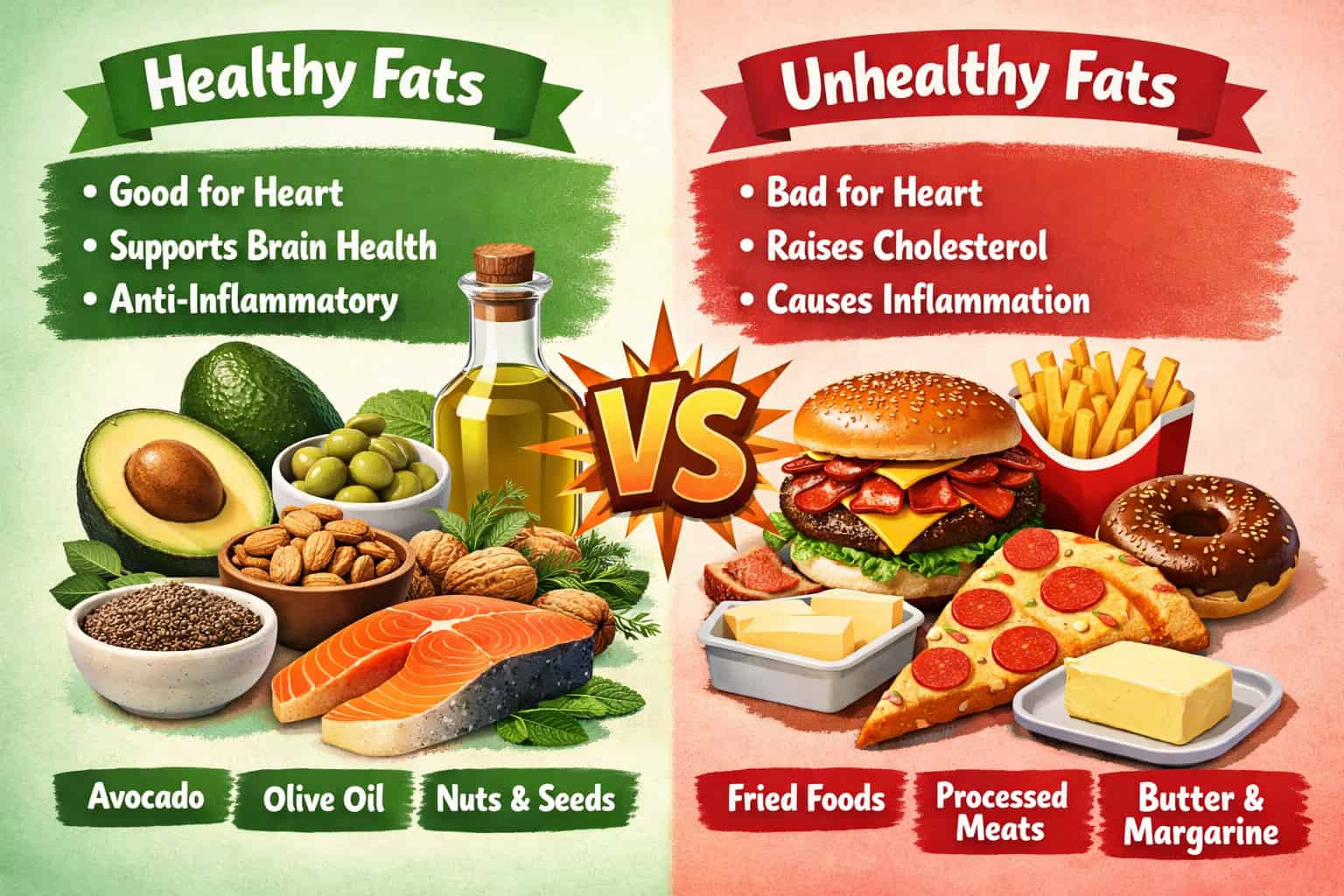
Healthy Fats
These are called ‘good fats’. They mainly come from plant sources and marine fish. They reduce inflammation in the body and keep the heart healthy.
Mono-unsaturated fats: They help reduce LDL (bad cholesterol) and increase HDL (good cholesterol).
Sources: Olive oil, nuts (cashews, almonds), avocados and peanut butter.
Polyunsaturated fats: The most important of these are omega-3 and omega-6 fatty acids, which the body cannot produce on its own.
Sources: Marine fish (hilsha, rupchanda, salmon), walnuts, chia seeds and flaxseed oil.
Unhealthy fats
These mainly come from processed foods, and excessive consumption increases the risk of heart disease and weight gain.
Trans fat: It is found in processed foods or fried foods. It lowers the good cholesterol in the body and increases the bad cholesterol.
Sources: Foods made with Dalda or Banaspati, French fries, commercial biscuits, cakes and donuts.
Saturated fat: It comes mainly from animal sources. Although it is not entirely bad, it is not good to eat in excess.
Sources: Red meat (beef, lamb), butter, cheese and coconut oil.
Brain Function
The brain is mainly made of fat: You will be surprised to know that about 60% of the human brain is fat. Therefore, it is important to have healthy fats in the diet to keep the brain active and maintain its structure. A low-fat diet can reduce brain performance in the long term.
Omega-3 and memory: The most important of the healthy fats is omega-3 fatty acids (especially DHA). It speeds up communication between brain cells (neurons). As a result, memory increases and the ability to learn new things increases. Marine fish, walnuts and flax seeds are excellent sources of it.
Myelin Sheath: The nerves or neurons in our brain are covered with a special coating, which is called the Myelin Sheath. This coating is mainly made of fat. It helps nerve signals or messages to reach from one place to another quickly. If there is a lack of fat, this signal exchange slows down, which can cause inattention.
Depression and Mood Control: Studies have shown that people who regularly eat healthy fats have much lower rates of depression and anxiety. Fat helps increase the effectiveness of the feel-good hormone called ‘serotonin’ in the brain, which keeps us in a good mood.
Prevents inflammation and reduces the risk of Alzheimer’s: Healthy fats reduce inflammation in the brain. This plays an effective role in reducing the risk of dementia or Alzheimer’s disease as we age.
Fat for weight loss

Keeps the stomach full for a long time: Fat takes longer to digest than carbohydrates. As a result, eating healthy fats keeps your stomach full for a long time. This reduces the tendency to feel hungry again and again or eat junk snacks, which indirectly helps in weight loss.
Insulin control and fat reduction: When you reduce carbohydrates and consume healthy fats (such as Omega-3), the body’s insulin level remains stable. When insulin is low, the body starts using stored fat as energy. This is called ‘fat burning mode’.
Increase metabolism or metabolic process: Healthy fats help increase the body’s metabolic rate. Especially, Medium-Chain Triglycerides (MCT) type fats (such as coconut oil) go directly to the liver and are converted into energy, and help burn calories.
Burn fat with fat: It is important to have good fats in the diet to burn stubborn fat accumulated in the body. This signals the body that there is enough energy coming from outside, so the body is not afraid to use up stored fat.
FAQ
| Question | Answer |
|---|---|
| Why are healthy fats important for fitness? | Healthy fats for fitness are essential because they provide long-lasting energy, support hormone production, and help with muscle recovery. They also reduce inflammation and improve overall workout performance. |
| What are the best sources of healthy fats for fitness? | Some of the best sources include avocados, nuts, seeds, olive oil, and fatty fish like salmon. These foods support heart health and improve fitness results. |
| How much healthy fat should I eat daily for fitness? | For most people, about 20–35% of daily calories should come from healthy fats. Focus on quality sources while maintaining a balanced diet. |
| Should I eat healthy fats before or after a workout? | Healthy fats are best consumed a few hours before a workout for sustained energy. Avoid heavy fat intake right before exercise. |
| Do healthy fats cause weight gain? | No, healthy fats do not cause weight gain when eaten in moderation. They actually help you stay full longer and support a healthy fitness lifestyle. |
Medical Disclaimer
If you have any underlying health conditions or experience any issues while adjusting your diet, it is always best to consult a qualified healthcare professional or doctor before making significant dietary changes.
Why Healthy Fats for Fitness Truly Matter
Healthy fats for fitness are a vital part of any balanced diet and should never be overlooked. They not only provide sustained energy for workouts but also support hormone balance, improve recovery, and enhance overall performance. Without enough healthy fats, your body may struggle to function at its best.
By including the right sources of Healthy fats for fitness such as nuts, seeds, avocados, and healthy oils you can fuel your body more effectively and maintain long-term health. The key is moderation and choosing high-quality fats over processed or unhealthy options.
Ultimately, understanding the role of Healthy fats for fitness can help you build a stronger, healthier, and more sustainable fitness lifestyle. Small dietary changes today can lead to better results and improved well-being in the long run.